

Every great structure in human history has been an argument about what matters. The soaring stone vaults of medieval cathedrals sought to pull human sightlines upward toward the divine, while the concrete ribbons of mid-century modernism insisted on openness, democracy, and industrial honesty. Architecture has never been a passive trade of assembling stone, timber, or steel. It is an act of translation, turning cultural values and physical necessities into lived environments.
Today, that translation process faces its most profound shift since the invention of the compass and the printed blueprint. Advanced computing, generative algorithms, and automated fabrication are no longer exotic experiments taking place in university research wings; they are active forces reshaping the drafting table. Yet as digital tools assume greater responsibility for generating shapes, calculating structural loads, and predicting climate performance, an essential question moves to the center of design culture: what happens to human creativity when machines learn how to build?
Beyond the Grid: The Rise of Algorithmic Form
For centuries, the physical limitations of manual drawing and conventional construction tethered architecture to standardized geometric orders. Straight lines, right angles, and regular modules dominated the landscape not solely because architects preferred them, but because drafting tables, lumber mills, and masonry setups demanded them.
Parametric software altered this equation. By defining architectural components as relationships governed by mathematical parameters rather than static drawings, designers gained the power to manipulate immense structural complexity in real time. If a site receives unusual wind loads or specific sun exposure, an algorithm can recalculate thousands of structural coordinates in seconds, curving facades and tapering columns to meet those forces with surgical precision.
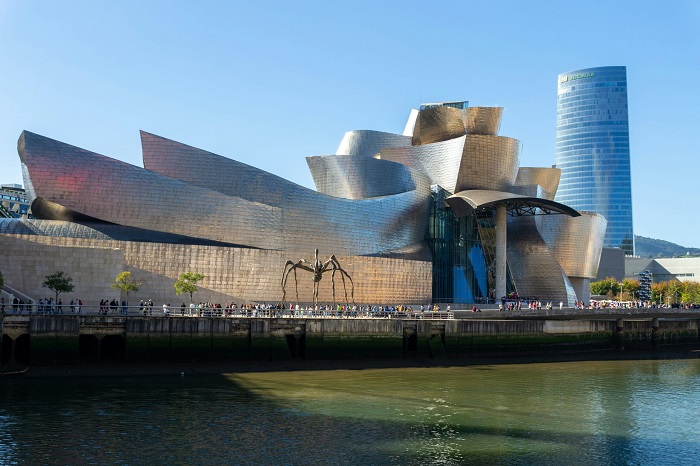
This computational dexterity has liberated the built environment from boxy pragmatism. We now see roofs that undulate like sand dunes, lattice facades that mirror cellular bone structures, and bridges that weave across rivers using minimal material along primary stress lines.
Yet formal freedom carries its own hazards. When software makes virtually any geometric gymnastics possible, novelty often disguises an absence of intent. An algorithm can produce an endlessly complex parametric facade, but it cannot explain why that facade belongs on a specific city street corner. The creative discipline of the architect is no longer tested by the ability to generate intricate geometries, but by the wisdom to discern which shapes dignify their surroundings and which are merely computational self-indulgence.
The Machine as Studio Collaborator
Rather than replacing human authorship, the digital revolution is transforming software from a passive drafting instrument into an active conversational partner. In progressive studios, technology is treated less as an automated production line and more as an iterative sparring partner.
Exploring the Outer Edges of Possibility
Generative design systems allow architects to input goals, boundary limits, and performance criteria—such as maximum daylight access, minimal steel consumption, and natural airflow paths—and receive hundreds of viable structural configurations within minutes. No human design team could manually draft and stress-test that volume of possibilities within typical project timelines.
By handling the brute-force processing of structural optimization, computers expand the designer’s conceptual horizon. The architect’s role transitions from drawing every line to curating possibilities, identifying unexpected design variations produced by the algorithm, and refining those options into coherent, habitable spaces.
Material Intelligence and Physical Realization
This partnership extends straight from the digital canvas to physical matter. Through robotic fabrication, large-scale 3D printing, and automated timber milling, the precision of computational design translates directly into raw construction.
Architects can now program robotic arms to lay compressed earth or specialized mortars in fluid, organic patterns that cut material consumption by thirty percent compared to traditional poured foundations. Similarly, algorithmic optimization makes cross-laminated timber viable for complex high-rise structures, locking away carbon while reviving natural grain and texture within corporate skylines. Technology here does not separate humans from nature; it offers the computational precision required to build sustainably within ecological boundaries.
The Limits of Logic: Preserving Spatial Empathy
For all its analytical brilliance, software remains fundamentally illiterate in the language of human sentiment. A computer can chart the path of sunlight across a room with absolute accuracy, but it has no understanding of how early morning light pooling on a breakfast table brings quiet comfort to an anxious mind.
Architecture operates across two distinct dimensions: the technical and the phenomenological. The technical dimension belongs to physics, geometry, acoustics, and thermal comfort—realms where machines excel. The phenomenological dimension belongs to spatial empathy, memory, tactile association, and historical narrative.
Consider what makes a building endure across generations. It is rarely the absolute efficiency of its floor plan or the complexity of its computational shell. People cherish buildings because of the way raw timber warms to the touch over decades, the acoustic hush inside a brick courtyard shielded from downtown traffic, or the intuitive way an entry threshold invites someone to pause and take off a coat. These qualities are rooted in the physical reality of the human body and the nuances of community life.
When architects rely too heavily on algorithmic output without subjecting it to sensory scrutiny, the result is often alienating. Digital architecture risks producing glossy, photogenic monuments that photograph brilliantly for digital portfolios but feel cold, confusing, or hostile to the people walking through their doors. Human creativity serves as the vital check against this sterile perfection, injecting the warmth, friction, and intentional imperfections that allow physical spaces to feel alive.
The Hybrid Studio: Craft in an Age of Computation
The most compelling architecture emerging today rejects the false choice between technological mastery and traditional craft. Instead, leading designers practice a hybrid philosophy that bridges digital sophistication with visceral, hands-on making.
In these environments, rapid computational prototyping sits alongside manual charcoal sketches, physical cardboard massing models, and intensive local community workshops. Architects use algorithms to understand complex urban microclimates, and then pick up soft pencils to capture the emotional rhythm of a neighborhood streetscape. They employ robotic cutting tools to shape stone, but guide the final surface texture with references drawn from regional masonry traditions.
This balance redefines what it means to be an architect in the modern era. Mastery no longer means mastering every command inside a software suite, nor does it mean clinging nostalgically to ink on mylar. True mastery lies in maintaining clear human intention while leveraging digital power to build spaces that are resilient, responsible, and poetic.
Architecture remains, at its heart, an optimistic discipline. Every building is a bet on the future, an investment of physical resources in the belief that human life will continue to unfold within its walls. Technology gives us the computational tools to construct that future with unprecedented resourcefulness and formal daring. But it is human creativity—our capacity for empathy, our historical memory, and our search for beauty—that ensures the structures we build will actually be worth living in.
