

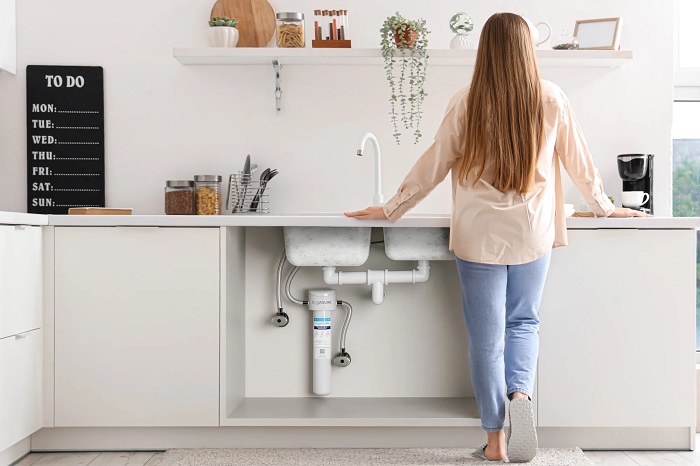
Water is the quietest workhorse in the American kitchen. We rely on it to brew morning espresso, wash crisp greens, boil stocks, hydrate sourdough starters, and keep family members refreshed throughout the day. Yet despite water being the primary ingredient in nearly everything prepared across a countertop, its source is often treated as an afterthought. Many households tolerate the inconveniences of rattling refrigerator filters, awkward countertop pitchers that require constant refilling, or stacks of plastic single-use bottles cluttering the pantry.
A kitchen remodel or fixture upgrade often obsesses over quartz slabs, custom cabinetry, and high-BTU ranges, while the quality of the water flowing into those spaces remains neglected. Integrating a built-in under-sink water filtration system fundamentally shifts this dynamic. By transitioning water purification from a clumsy surface chore into permanent, hidden infrastructure, homeowners elevate their daily culinary routines, safeguard household health, and restore aesthetic calm to the heart of the home.
Beyond the Pitcher: Superior Multi-Stage Purification
The most immediate distinction between portable filtration and an integrated system lies in the underlying engineering. Standard gravity-fed pitchers rely almost exclusively on loose activated carbon granules. While carbon is adequate for knocking down the sharp chemical smell of municipal chlorine, it does little against heavier dissolved solids, agricultural runoff, microplastics, or microscopic biological contaminants.
Under-sink installations, by contrast, harness line pressure to drive municipal or well water through sophisticated multi-stage filtration arrays. A typical premium system pairs high-density sediment pre-filters with dense catalytic carbon blocks and semi-permeable reverse osmosis membranes.
The sediment stage captures rust, silt, and pipe scale before water enters the carbon block, which neutralizes chloramines, volatile organic compounds, and industrial solvents. From there, a reverse osmosis membrane forces water molecules through microscopic pores down to 0.0001 microns, effectively rejecting heavy metals like lead and arsenic, along with persistent contaminants like PFAS and nitrates.
Advanced systems conclude with an alkaline remineralization stage, reintroducing balanced traces of calcium and magnesium to restore a crisp, balanced profile rather than the flat, acidic taste common to purely distilled water.
The Culinary Difference: Purity as an Ingredient
Home cooks spend considerable effort sourcing heritage meats, organic produce, and single-origin coffee beans, only to dilute those flavors with tap water carrying traces of municipal treatment chemicals. Water is a universal solvent, and whatever minerals or disinfectants reside within it will interact directly with the chemistry of food.
-
Nuanced Coffee and Tea Extraction: Delicate single-origin coffees and loose-leaf teas are extraordinarily sensitive to water hardness and chlorination. Free chlorine reacts with aromatic volatile compounds, producing harsh, astringent notes. Purified water allows the natural floral, berry, and chocolate notes of coffee beans to bloom without bitterness.
-
Vibrant Cooking and Baking: Boiling vegetables in chlorine-laden tap water can dull their natural pigmentation and degrade heat-sensitive nutrients. When reducing stocks, sauces, or braising liquids, evaporation concentrates everything in the pot—including tap water impurities. Using clean water ensures reductions develop pure savory depth rather than residual mineral salinity.
-
Slow-Melting, Crystal-Clear Ice: Cloudy freezer ice cubes are caused by trapped air, dissolved gases, and mineral impurities freezing unevenly. Running filtered water directly to an integrated icemaker yields dense, clear ice that chills drinks without shedding cloudy sediment or imparting freezer odors.
Aesthetic Restraint and Countertop Liberation
Modern kitchen architecture centers on visual serenity. Clean waterfall islands, concealed paneled appliances, and uninterrupted slab backsplashes reflect a desire to eliminate visual noise. Bulky plastic filtration carafes taking up shelf space in the refrigerator or cumbersome units clamped onto gooseneck faucets directly undermine that design intent.
An integrated filtration system conceals the entire mechanical footprint within the base cabinet below the sink. Modern modular systems feature streamlined manifolds, compact pressurized storage tanks, or high-flow tankless reverse osmosis designs that consume only a fraction of under-sink storage space.
Above the counter, the system integrates seamlessly into the kitchen’s established design language. Homeowners can install a dedicated architectural drinking water tap finished in unlacquered brass, matte black, or polished nickel to match primary bridge faucets. Alternatively, contemporary three-way mixer faucets route both untreated utility water and purified drinking water through a single, elegant fixture using separate internal pathways, preserving pristine countertop real estate without adding an extra hole to custom stone surfaces.
Household Economics and Environmental Stewardship
Relying on bottled water is both financially inefficient and environmentally exhausting. The average American household consuming two cases of bottled water weekly spends hundreds of dollars each year on single-use plastic, not to mention the physical chore of hauling heavy cases from car trunks to pantries.
A built-in filtration system produces pristine, high-purity water on demand for mere pennies per gallon. After the initial equipment investment, routine operating costs are limited to scheduled cartridge replacements every six to twelve months. Over a multi-year horizon, the system easily pays for itself simply by eliminating bottled water line items from grocery budgets.
Simultaneously, the environmental dividend is substantial. Shifting away from packaged water eliminates thousands of petroleum-based plastic bottles from household waste streams over the system’s lifespan. It removes the carbon footprint tied to bottling, trucking, and chilling water, turning sustainable living into a frictionless, automatic habit.
Protecting Expensive Kitchen Appliances
Beyond cooking and drinking, high-purity water serves as a protective shield for high-end kitchen appliances. Municipal water carrying high levels of calcium, magnesium, and dissolved solids leaves behind chalky limescale deposits as it heats.
Over time, limescale accumulation coats heating elements, constricts internal copper piping, and leads to premature mechanical failure in plumbed espresso machines, combi-steam ovens, and dedicated under-counter ice makers. Routing purified water to these delicate appliances prevents scale buildup before it starts, preserving operating efficiency, eliminating the need for harsh chemical descaling cycles, and extending the lifespan of expensive culinary equipment.
Installing a built-in water filtration system bridges the gap between mechanical utility and refined living. It treats water not merely as a civic utility, but as an essential element of domestic wellness and culinary craft. By incorporating professional-grade filtration beneath the counter, you anchor your home with a permanent resource that honors both the food you prepare and the people you gather around your table.
