

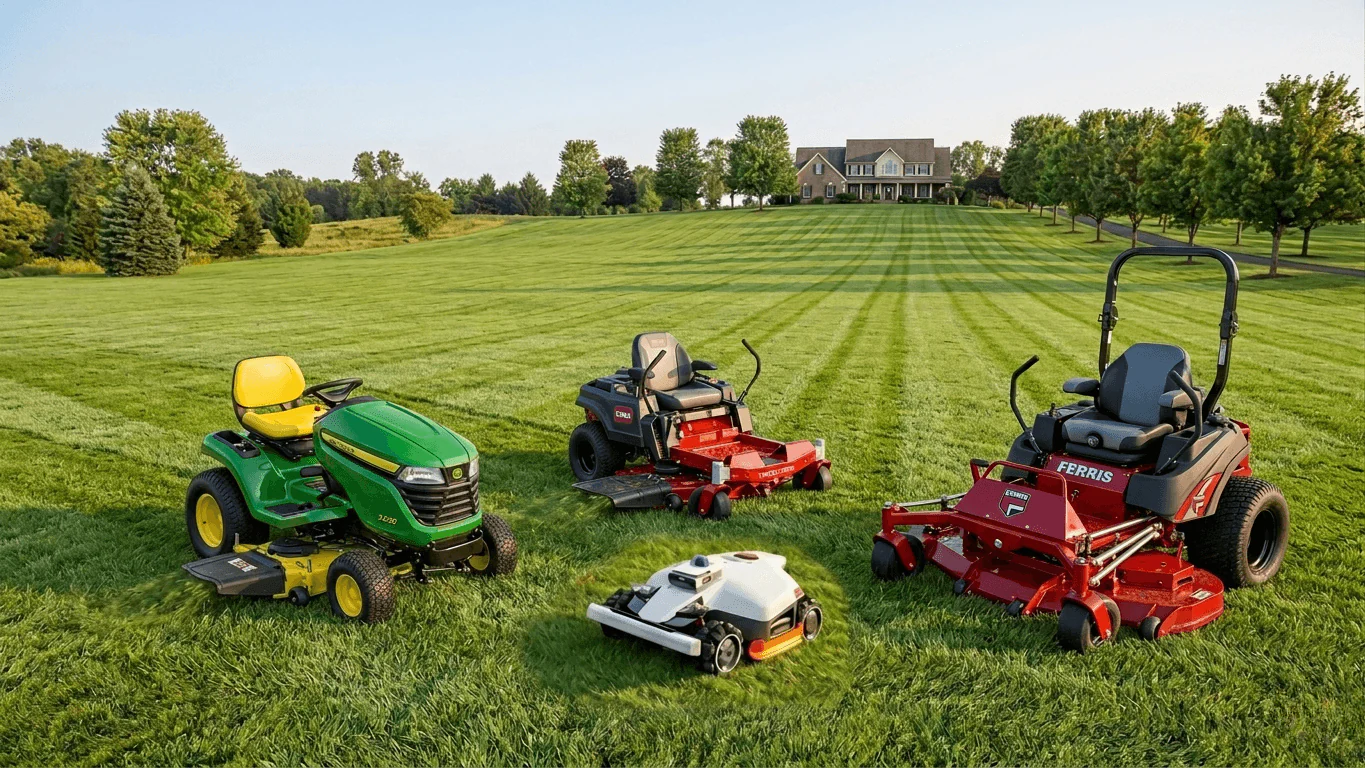
Owning a large garden, smallholding, paddock, orchard, or rural property can be incredibly rewarding. It also comes with a long list of maintenance responsibilities that change throughout the year. Grass needs cutting, materials need moving, tracks require upkeep, and seasonal tasks seem to arrive one after another. As a result, choosing the right garden machinery becomes one of the most important decisions a landowner can make.
Many people begin their search with a single task in mind, usually mowing. However, once they look more closely at the demands of maintaining a larger property, they often realise they need equipment capable of much more than simply cutting grass.
The challenge is finding machinery that can handle a variety of jobs efficiently without becoming unnecessarily expensive or overly complicated.
Understanding the Demands of Your Land
The first step is evaluating exactly how the property is used. Not all multi-purpose land has the same requirements. A large formal garden has very different maintenance needs compared to a smallholding with livestock, an orchard, or a paddock used for horses.
For some owners, mowing may account for the majority of annual work. In these situations, a ride-on mower can often provide an effective and economical solution. Modern ride-on machines are capable of maintaining large areas of grass while offering comfort and efficiency that would be difficult to achieve with a pedestrian mower.
However, many rural properties involve additional responsibilities. Transporting tools, moving feed, carrying fencing supplies, collecting firewood, and maintaining tracks can all become regular tasks. Once these requirements enter the equation, machinery versatility becomes increasingly important.
Terrain should also be considered carefully. Flat lawns are relatively straightforward to maintain, but uneven ground, slopes, rough grass areas, and mixed-use land often place greater demands on equipment. Choosing machinery capable of handling the property’s most challenging areas can help avoid frustration later.
Storage space is another practical factor that is frequently overlooked. Larger machines and multiple attachments require secure storage and protection from the weather. Before investing in machinery, it is wise to ensure suitable space is available.
Matching Machinery to Multiple Tasks
One of the biggest mistakes buyers make is focusing entirely on their immediate needs. It is easy to select machinery that solves today’s problems while overlooking future requirements.
For example, a ride-on mower may initially seem perfect for maintaining several acres of grass. Over time, however, property owners often take on additional projects. New gardens are created, landscaping work begins, or small agricultural activities are introduced. Suddenly, mowing represents only one part of the overall workload.
This is where compact tractors often become attractive. Their ability to support a wide range of attachments allows them to take on many different tasks throughout the year. Mowing, towing, cultivating, grading, and material handling can potentially be performed by a single machine.
At the stage where buyers begin comparing these options, many discover that selecting machinery is really about balancing specialisation against versatility. Suppliers such as Ron Smith often help customers assess not only what they need today but also how their property’s requirements may evolve in the future.
That said, versatility is not always necessary. For some properties, investing in a highly capable machine may result in paying for features that are rarely used. The most suitable choice is often the one that aligns most closely with actual workload rather than theoretical possibilities.
Attachments can play a major role in extending capability. Trailers, sweepers, spreaders, aerators, rollers, and other accessories can significantly increase the usefulness of certain machines without requiring a completely different piece of equipment.
This approach can be particularly cost-effective for owners who need occasional additional functionality but do not require the full capabilities of a compact tractor.
Looking Beyond Purchase Price
Cost is naturally an important consideration, but focusing solely on the purchase price can be misleading. The cheapest machine is not always the most economical over the long term.
Fuel consumption, servicing requirements, attachment costs, storage needs, and resale value all contribute to overall ownership expenses. A machine that costs more initially may deliver better value if it eliminates the need for additional equipment or significantly reduces labour requirements.
Reliability should also be prioritised. Land maintenance tasks often occur on tight schedules, particularly during periods of rapid grass growth or seasonal work. Machinery downtime can quickly become frustrating and costly.
Comfort is another factor worth considering. Larger properties may require hours of operation at a time. Features such as ergonomic seating, easy-to-use controls, and smooth operation can make a significant difference to the ownership experience.
Future support is equally important. Access to servicing, replacement parts, and technical assistance helps ensure machinery remains productive throughout its lifespan.
Ultimately, choosing garden machinery for multi-purpose land is about understanding the balance between current needs and future possibilities. The best machine is not necessarily the largest or most powerful. Instead, it is the one that provides the right combination of capability, efficiency, and value for the specific property being maintained.
By carefully assessing mowing requirements, towing needs, maintenance responsibilities, terrain conditions, and long-term plans, landowners can make informed decisions that support their property for years to come. A thoughtful purchase today can simplify maintenance, improve productivity, and make managing multi-purpose land considerably more enjoyable in the future.
