

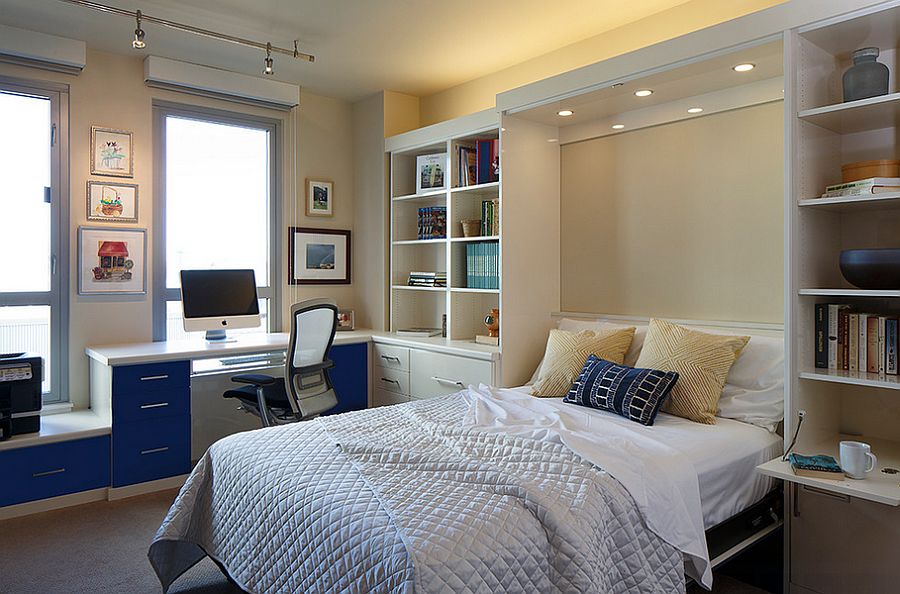
Most dual-purpose rooms suffer from an identity crisis. Walk into the average home office that moonlights as a spare bedroom, and the visual tension is immediately obvious: an ergonomic mesh chair hovers uncomfortably over a lumpy futon, while computer towers and tangled cables blink beside decorative bed pillows. In modern homes where square footage must work twice as hard, this space carries an immense burden. It needs to foster sharp focus and professional discipline five days a week, yet transform into an inviting, restful retreat the moment friends or relatives arrive for the weekend.
Achieving this balance is not about compromising both functions until neither works well. Rather, it requires treating the room as an intentional chameleon. By prioritizing versatile furniture, concealing the machinery of daily work, and curating thoughtful hospitality details, you can craft a space that supports rigorous productivity by day and surrounds your guests in genuine comfort by night.
Rethinking the Bed: Finding Comfort Without Surrendering Floor Space
The single greatest spatial challenge in a shared office and guest suite is the bed. A traditional queen mattress permanently parked in the center of the room consumes prime real estate, dictating circulation paths and making the room feel like an improvised workstation in a bedroom.
To maintain an open, functional office layout during the workweek, look beyond conventional bed frames. Modern custom wall beds—often called Murphy beds—have evolved far beyond the squeaky, utilitarian units of past generations. Contemporary designs integrate seamlessly into perimeter cabinetry, offering built-in bookshelves, drop-down desks, or sofa seating when folded away. When lowered, they provide a real mattress on a sprung slat base, delivering legitimate overnight support without dominating the room from Monday through Friday.
If built-in cabinetry is outside your project scope, an upholstered daybed piled with tailored lumbar pillows functions effectively as an executive reading sofa during the day. For rooms with wide footprints, consider a high-end sleeper sofa featuring a pull-out mechanism with high-density foam or gel-infused toppers. Whichever option you select, prioritize ease of operation so transitioning the room does not feel like an exhausting physical workout.
Concealing the Machinery of the Workday
Nothing ruins a guest’s ability to unwind faster than falling asleep under the cold glare of office hardware. If your visitors are staring at dual widescreen monitors, desktop printers, and towering stacks of client folders, they will inevitably feel like intruders camped out in a corporate back room.
The secret to a successful flex room lies in closed architectural storage. Trade open shelving units for a handsome credenza, an armoire, or deep lower cabinets fitted with solid doors. House the printer, scanner, extra cords, and bulk office supplies behind closed cabinetry. If your desk sits in the line of sight from the sleeping area, invest in a piece of furniture with integrated pencil drawers and cord-management grommets so you can clear the desktop entirely at the end of the day.
Cable management is non-negotiable. Gather power bricks, monitor cords, and charging cables into under-desk raceways or discreet wall channels. When the workday ends, sliding a laptop into a drawer and shutting off power to peripheral monitors instantly removes the psychological static of business, signaling that the room is officially off the clock.
Curating the Environment: Color, Lighting, and Acoustics
Balancing two opposite emotional states—alertness for meetings and tranquility for sleep—requires deliberate choices in your decorative palette and environmental elements.
Strategic Lighting for Work and Rest
A single overhead ceiling fixture will inevitably fail this room. Productive work requires crisp, directional light, while restful hospitality demands soft, warm illumination.
Divide the room into distinct lighting circuits. Position an adjustable, high-CRI task lamp on the primary desk surface to illuminate documents without casting room-wide glare. Elsewhere in the space, install warm-spectrum ambient lighting: a dimmable floor lamp fitted with a linen shade, or a pair of wall-mounted reading sconces flanking the sleeping area. Equipping the room with smart dimmers or three-way bulbs allows guests to dial back the room’s brightness into an intimate, hotel-like glow.
Color Palettes That Ground Both Modes
Avoid clinical office whites, which feel institutional after dark, as well as heavily saturated stimulant colors like vivid reds or electric blues. Instead, wrap the room in rich, grounding mid-tones that feel sophisticated during a video conference and cozy when winding down for sleep.
Shades of warm greige, soft sage, muted terracotta, and dusty slate blue provide enough visual weight to give the room character without visually shrinking the space. Pair these hues with natural wood finishes and textured fabrics to introduce warmth.
Acoustics also deserve close attention. Home offices are often prone to distracting echoes from hard desks and wood flooring. Incorporate a generous wool area rug and lined linen or velvet drapes. These soft surfaces elevate the room visually while dampening ambient sound, ensuring both quiet Zoom calls for you and peaceful rest for your guests.
Hospitality Details That Signal Genuine Welcome
A truly successful guest room does not make visitors feel like they are living out of a suitcase on the floor. Carving out small, deliberate gestures of hospitality transforms a pragmatic space into a welcoming retreat.
Reserve a dedicated portion of storage strictly for visitors. Clear out a closet section and supply a dozen matching wooden hangers, or designate two empty drawers inside the credenza where guests can unpack their clothes. Keep a folding wooden luggage rack tucked neatly into a closet so their bags stay elevated and accessible.
On the bedside surface—or the cleared corner of the desk—place a small tray outfitted with the essentials: a fresh glass water carafe with an inverted tumbler, a discreet card with your home Wi-Fi network and password, and a multi-port charging dock for smartphones and tablets. Providing a dedicated basket containing rolled Turkish bath towels, spare toiletries, and an extra woven throw blanket eliminates the awkwardness of guests having to forage through your hall closets late at night.
The Ritual of the Room Reset
A dual-purpose room functions best when you establish a clear transition ritual. Before your guests pull into the driveway, take twenty minutes to deliberately retire the office identity.
File away loose papers, slide the ergonomic office chair into a corner or closet, and cover the desk surface with a small vase of fresh branches or a scented candle. Fold down the bedding, adjust the window shades, and switch on the ambient lamps. By physically packing away the workweek, you honor your guests with a space that feels curated exclusively for their arrival, proving that practical utility and graceful living can effortlessly share the same roof.
