

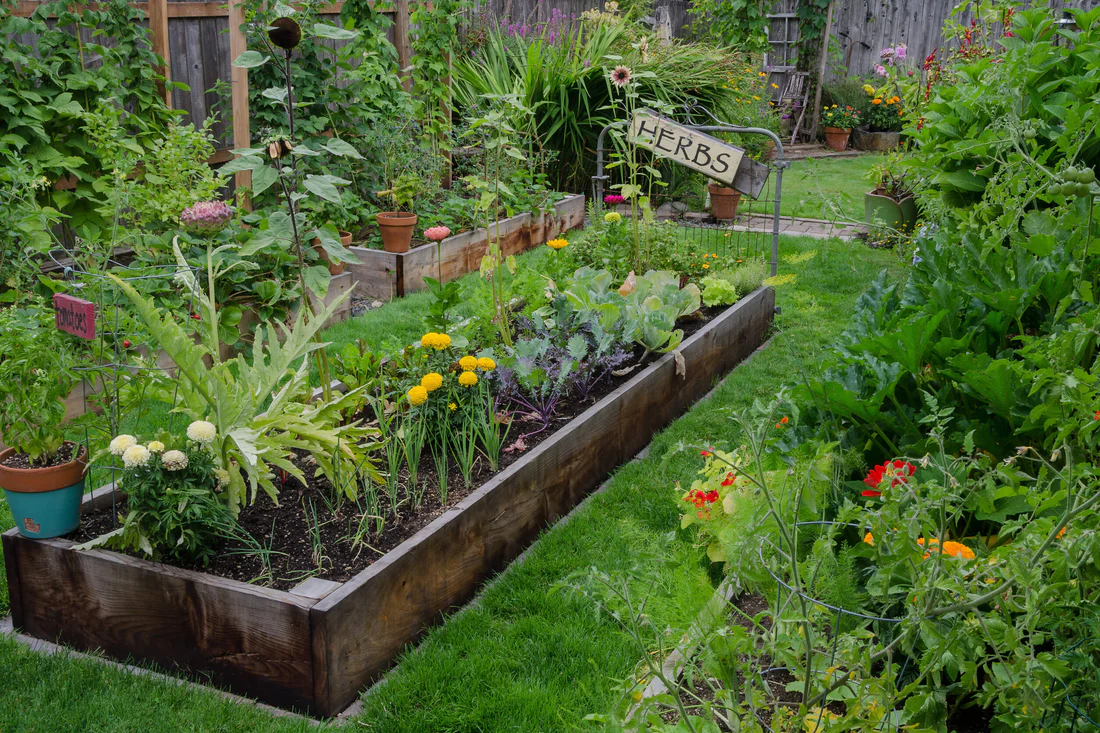
This is the perfect answer if your dream has always been to grow your own fresh veggies, vivid flowers, or aromatic herbs but felt hampered by space or poor soil conditions.
By raising your growing area above ground level, this approach lets you design a vibrant garden anywhere, from a modest backyard to a concrete patio.
Not only do raised garden beds look nice, but they also offer great drainage and superior-quality of soil, and also easy access to the flower bed for weeding, harvesting and planting.
Starting a raised garden bed is easier than you would think, regardless of your gardening expertise.
Why Choose Raised Bed Gardening?
It presents a number of benefits that draw appeal.
It provides you with more control over your soil. It also allows you to completely fill your garden with premium soil that is appropriate for the plants you wish to grow, removing the difficulties with unsuitable native soil such as heavy clay or sand.
Higher garden beds also help improve drainage, preventing soggy roots and lowering the risk of root rot. The higher soil heats in the spring, providing a head start on the growing season.
Moreover, raised beds can help control pests, particularly burrowing animals like moles and gophers, which are less likely to break through the edges of a well-made raised bed.
For those with mobility problems, back discomfort, or anyone who would want a more comfortable gardening experience, the higher height implies less bending and kneeling, thus it is more accessible.
Choosing the Right Location for Your Raised Bed
Choosing the proper site always comes first.
Most vegetables and flowering plants flourish in full sun. So, choose a location with at least six to eight hours of direct sunshine daily. Examine the sunshine patterns if you have a small area and orient your bed for maximum sunlight.
In addition, put your raised bed somewhere you can easily manage and water. To simplify irrigation, ideally, place it next to a water supply. If you are planting herbs or vegetables, take into account how close your kitchen is. There is nothing better than having fresh food right at hand for cooking.
Finally, consider the look of your garden. Raised beds can improve the appearance of your outside area, so arrange them to accentuate your current landscaping design.
The location of your raised bed will change the appearance of your yard, whether you’re designing a focal point, lining a path, encircling a patio, or otherwise.
Building or Buying Your Raised Bed: Materials and Options
There are only two options, either you buy a pre-made kit or make your own. Although it requires some basic DIY knowledge, building your own raised bed lets you choose size, form, and materials more freely.
DIY raised beds often need treated wood, composite wood, metal, and stone.
Untreated wood such as cedar or redwood is usually the popular choice as it looks natural and resists rot. Still, it will break down eventually with time and need a replacement.
Combining recycled plastic with wood fibres, composite wood is a longer-lasting substitute with a neat look. Though they can get somewhat hot in full sun, which may alter the soil temperature, metal beds, often composed of galvanised steel, are fairly durable and give your garden a modern touch.
Raised bed kits are readily available at garden centres. Particularly for novices, these kits are a simple and practical choice because of their several sizes, materials, and designs. Easy-to-follow directions and pre-made kits will allow you to assemble a bed in a few hours with little tools.
Preparing the Site and Soil for Your Raised Bed
It’s time to get ready for the site once you have decided on your place and bed. Clear the area first of grass, weeds, and trash. If you’ll lay your raised bed straight on dirt, loosen the ground using a garden fork to enhance drainage and enable deeper growth of plant roots.
Cover the bottom with a landscape fabric to prevent dirt from accumulating on concrete or other hard surfaces.
The success of your garden mainly depends on the soil you use in your raised bed. A good mix should include organic materials, proper light, and well-draining. Using dirt, compost, and a soilless growing medium like peat moss or coconut coir, you can mix your own.
Though you can change the ratios depending on your particular need, a usual ratio is 60% topsoil, 30% compost, and 10% soilless medium.
Using premium soil to fill your raised bed guarantees that your plants receive the nutrients required for their best growth. It also lets you manage the soil’s pH, drainage, and texture, thereby creating the perfect growing conditions for many kinds of plants.
What to Grow and When
The opportunity to produce a wide spectrum of plants in a short area is one of the pleasures of raised bed gardening.
Consider your favourite foods or the flowers you find most beautiful while in blossom. Popular choices for raised beds are vegetables, including tomatoes, peppers, lettuce, and carrots. In herbs, basil, parsley, and thyme are ideal for covering voids and adding aroma.
Schedule your planting around your area’s growing season. Start with early spring’s cool-season crops, lettuce, spinach, and radishes, then move to warm-season veggies like tomatoes, cucumbers, and beans as the temperature rises. To stretch your harvest, grow another batch of cool-season vegetables in the autumn.
Plan your arrangement while keeping your plants’ height and spacing in mind. Shorter crops like lettuce and herbs can be put at the front. However, taller plants like tomatoes should be placed towards the rear of the bed.
Remember that planting appropriate plants together, a practice known as companion planting, helps maximise space and enhance plant health.
Watering and Maintenance
Particularly in hot weather, raised beds dry out faster than in-ground gardening. That is why regular irrigation is necessary.
You should water your plants early in the morning or late in the afternoon when the temperature is cooler, and the rate of evaporation is at its lowest.
You can also take advantage of drip irrigation systems or a soaker hose to facilitate the process and increase your watering efficiency.
Moreover, consistent upkeep helps your raised bed garden remain healthy. Mulching your raised bed with straw, wood chips, or compost enhances soil structure, helps keep moisture, and controls weeds. Keep an eye out for weeds and remove them before they have time to spread.
Look for pests and diseases and act right away when problems arise.
Using a balanced organic fertiliser every few weeks can also assist in restoring nutrients and maintaining the health of your garden all through the growing season.
Raised beds, with their rich, tailored soil, are ideal for high-yielding gardening.
Conclusion
Whether you’re building a vegetable patch, a vibrant flower garden or a fragrant herb nook, raised bed gardening is an easy and satisfying method of growing your own plants.
A little planning, preparation, and care will help you design a vibrant raised bed garden that not only enhances your area but also provides fresh home-grown food right at your hand.
So get your tools, dig in, and savour the many advantages of raised bed gardening. Consider professional gardening services should you need any help or advice. Happy cultivating!
